When most people hear “ultrasound,” they picture a pregnancy scan. But ultrasound is also one of the most useful tools for understanding gynecologic health, no pregnancy required. If your doctor has ordered a pelvic ultrasound, or you have symptoms you want real answers on, here is what to expect from start to finish.
What Is a Pelvic Ultrasound?
A pelvic ultrasound uses sound waves to create live images of the organs in your lower abdomen. It focuses on the uterus, the uterine lining, the ovaries, and the cervix, along with the bladder and surrounding tissue.
Unlike X-rays or CT scans, ultrasound uses no radiation. It is safe, painless for most people, and usually finished within 30 minutes.
Common Reasons for a Pelvic Ultrasound
Doctors order pelvic ultrasounds to investigate symptoms, check on a known condition, or follow up on an earlier finding. Common reasons include:
- Heavy, prolonged, or unexpected bleeding
- Pelvic pain or cramping
- Irregular periods
- Suspected fibroids or ovarian cysts
- Fertility evaluations
- Checking IUD placement
- Follow-up on a prior scan
In many cases, an ultrasound is the first step toward a clear diagnosis, and it often rules out more serious concerns quickly.

Transabdominal vs. Transvaginal Ultrasound
A pelvic ultrasound can be done two ways, and many visits include both. Each one shows the pelvic organs from a different angle.
| Transabdominal | Transvaginal | |
|---|---|---|
| How it is done | A probe moves over your lower belly with warm gel | A slim, covered probe is placed just inside the vagina |
| Bladder | Usually full | Usually empty |
| Best for | A wide view of the whole pelvis and larger findings | Close, detailed views of the uterine lining and ovaries |
| What it feels like | Light pressure, mostly from a full bladder | Similar to a pelvic exam, often less uncomfortable |
| Typical length | 10 to 20 minutes | 10 to 20 minutes |
Your sonographer will explain which approach you need and why before starting.
Need a pelvic ultrasound without the long wait? Lancaster MFM accepts self-referrals for GYN imaging. Schedule your ultrasound and get results reviewed with you in person.
How to Prepare
Preparation is simple, but it matters. Follow the instructions you receive when you book, since they depend on the type of scan.
For a transabdominal scan, you may be asked to drink several glasses of water about an hour beforehand and avoid emptying your bladder. A full bladder lifts the bowel out of the way and gives a clearer picture. For a transvaginal scan, you will empty your bladder right before.
Wear comfortable, two-piece clothing. If you are tracking your cycle, note the first day of your last period. Your provider may want the scan at a certain point in your cycle for the clearest view of the uterine lining.
During the Scan
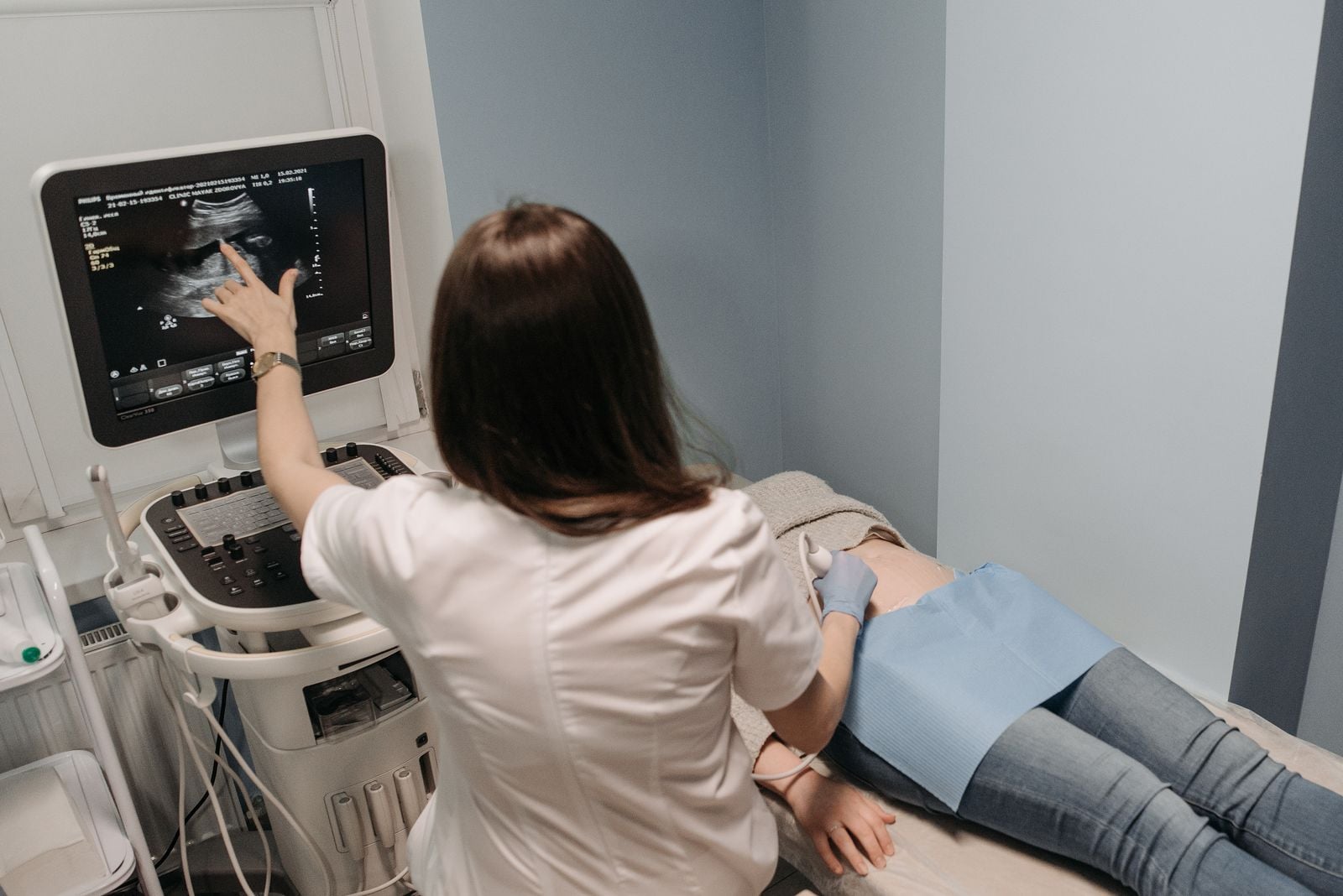
You will lie on an exam table while the sonographer captures images from several angles. The room is often dimmed so the screen is easier to read. You can ask questions at any time, and you can ask to pause if anything feels uncomfortable.
For a transvaginal scan, you will undress from the waist down and be fully draped. Some patients prefer to insert the probe themselves, so feel free to ask if that would help you feel more comfortable. If you have had a difficult experience with pelvic exams in the past, let your sonographer know. We will go at your pace and explain each step before it happens.
Getting Your Results
At many imaging centers, you leave without answers and wait days for a callback. At Lancaster Maternal Fetal Medicine, one of our specialists reviews your images and talks through the results with you personally before you leave. We also send a full report to your referring provider so your care keeps moving.
GYN Ultrasound in Lancaster County
Families across Lancaster County and the Reading area already trust LMFM with some of the most important pregnancy scans of their lives. What many people do not realize is that we offer that same expertise through our GYN ultrasound services.
You do not need a referral, and we work to get you in quickly instead of making you wait weeks for an opening. Our sonographers use the same advanced equipment we use for pregnancy ultrasounds, in the same calm, unhurried setting. We accept most major insurance plans and can help with coverage questions before your visit.
Frequently Asked Questions
Does a transvaginal ultrasound hurt?
Most people feel mild pressure but not pain. The probe is slim and lubricated, and the experience is similar to a routine pelvic exam. Let your sonographer know if anything feels uncomfortable so they can adjust.
Can I have a pelvic ultrasound during my period?
Yes. A pelvic ultrasound can be done during your period, and it will not affect the safety of the scan. Your provider may still prefer a specific point in your cycle to get the clearest view of the uterine lining.
How long does a pelvic ultrasound take?
Most pelvic ultrasounds take 20 to 30 minutes from start to finish. If both a transabdominal and transvaginal scan are needed, plan for the full half hour.
Do I need a referral for a pelvic ultrasound at Lancaster MFM?
No. Lancaster Maternal Fetal Medicine accepts self-referrals for GYN ultrasounds. You can call the office directly to schedule.
Can a pelvic ultrasound find fibroids and ovarian cysts?
Yes. Pelvic ultrasound is one of the most common and reliable ways to find fibroids and ovarian cysts. It shows their size and location, which helps your provider decide whether treatment or follow-up is needed.


